
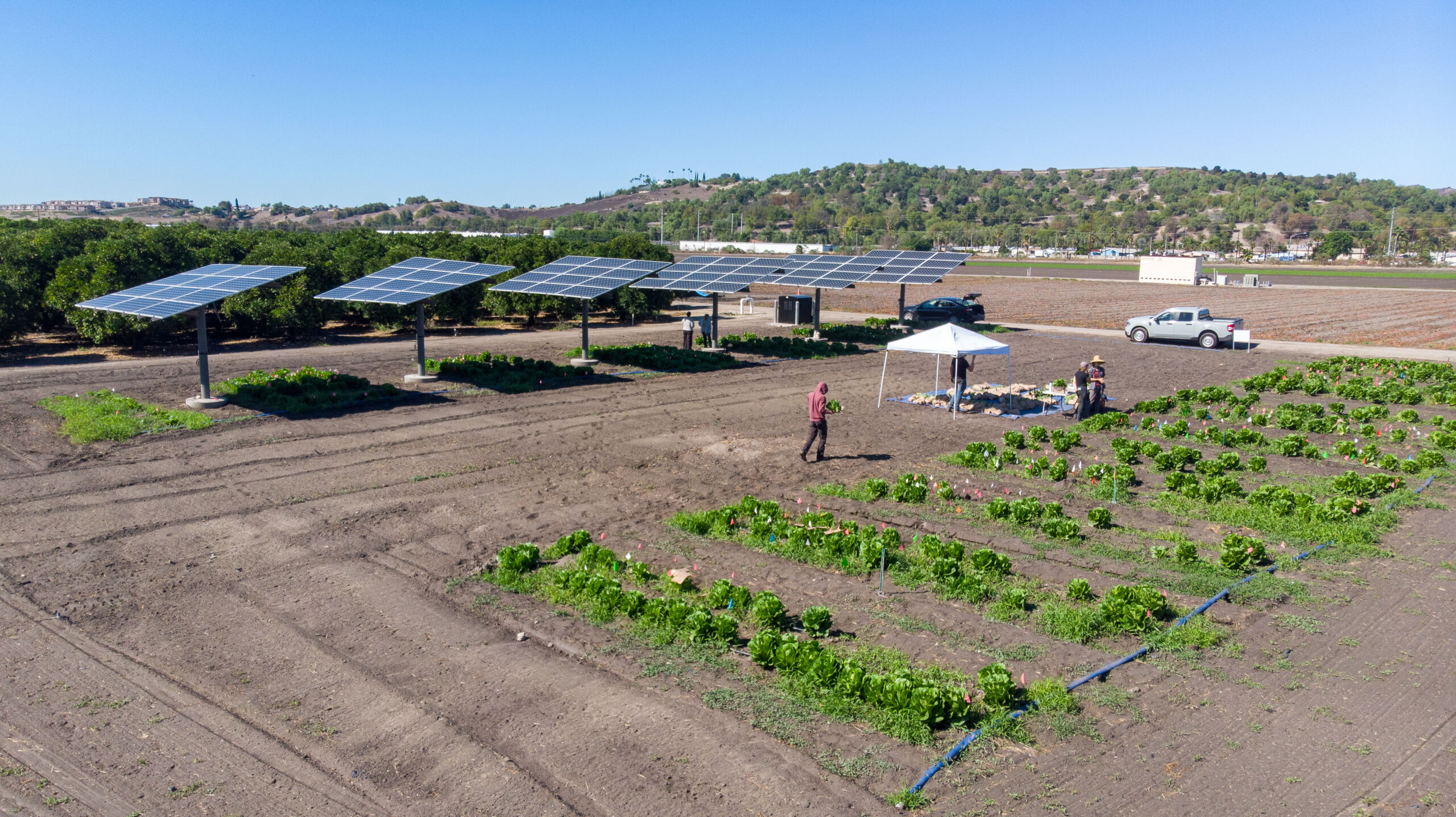
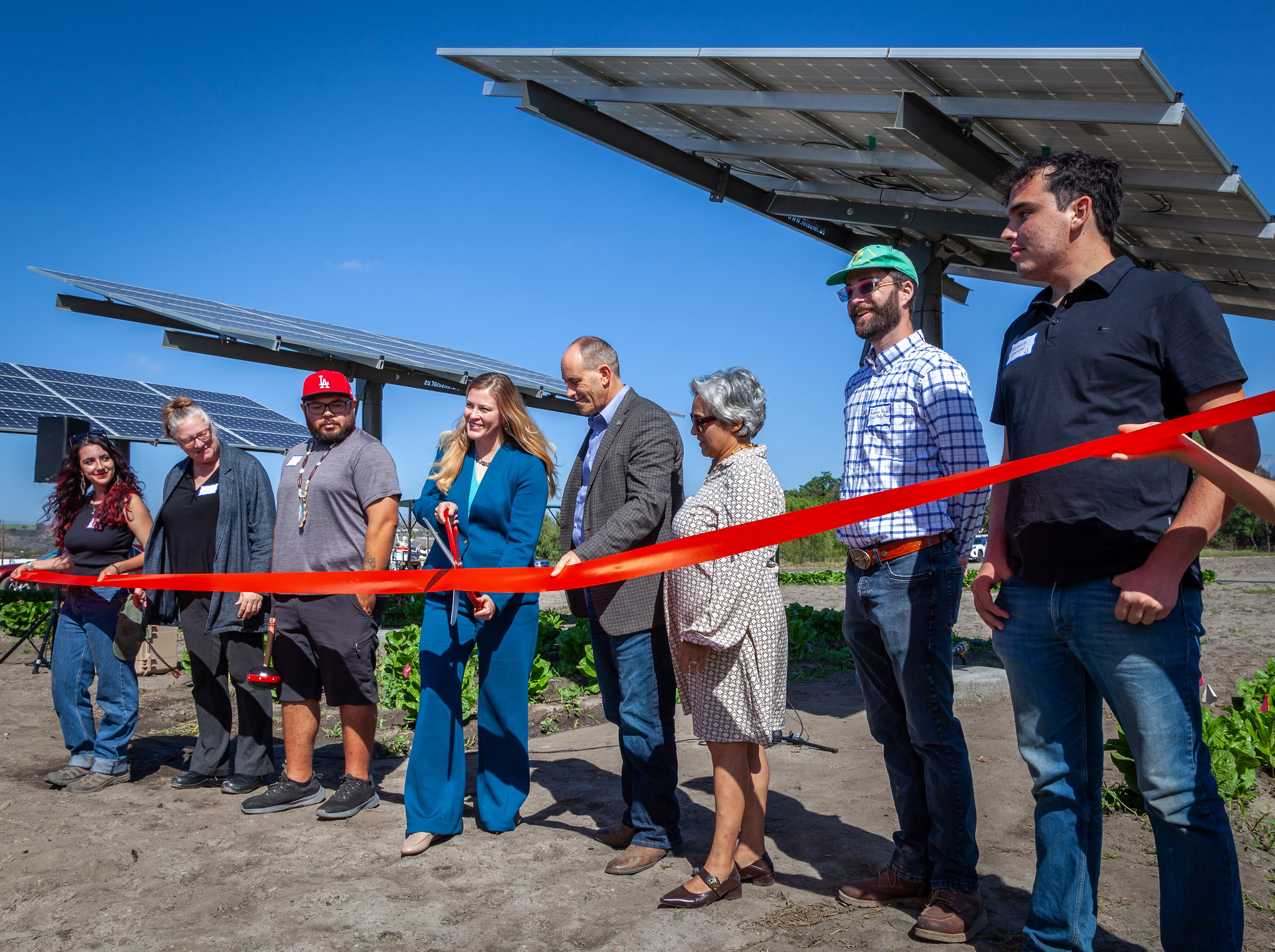
Cal Poly Pomona’s Spadra Farm has been a place to grow crops and train farmers for generations. Now it’s also home to Southern California’s first agrivoltaics research site focused on commercial crops, where six MT Solar pole mounts hold a 24 kW array above rows of romaine lettuce.
The project is led by Pitzer College’s Robert Redford Conservancy for Southern California Sustainability, in partnership with Cal Poly Pomona’s Huntley College of Agriculture and with grant funding from the Foundation for Food and Agriculture Research (FFAR). Researchers are measuring how panel shade affects plant growth, soil moisture, and water use. Those questions matter more every year as inland Southern California farmland faces heat, drought, and development pressure.
Solar Racking Built Around the Research
To design and build the solar side of the project, the Conservancy turned to GRID Alternatives Southern California (GRID SoCal). GRID SoCal is the regional arm of the nonprofit solar installer known for expanding clean energy access and training the next generation of solar workers.
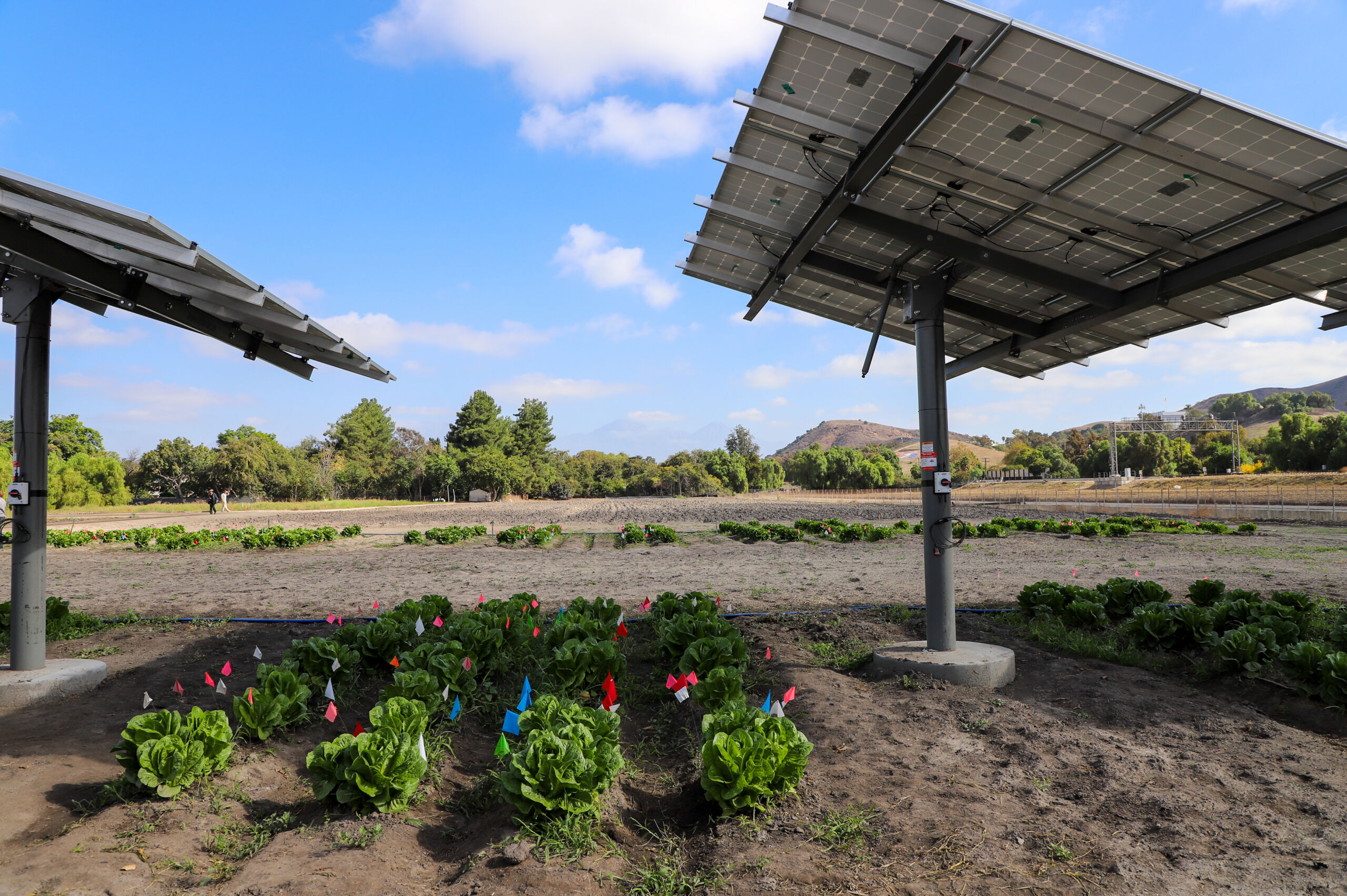
A research site asks more of its racking than a typical ground mount. Shade is the variable being studied, so researchers needed to change it on purpose. That meant every array had to tilt easily across a wide range, season by season or experiment by experiment, without a crew rebuilding anything.
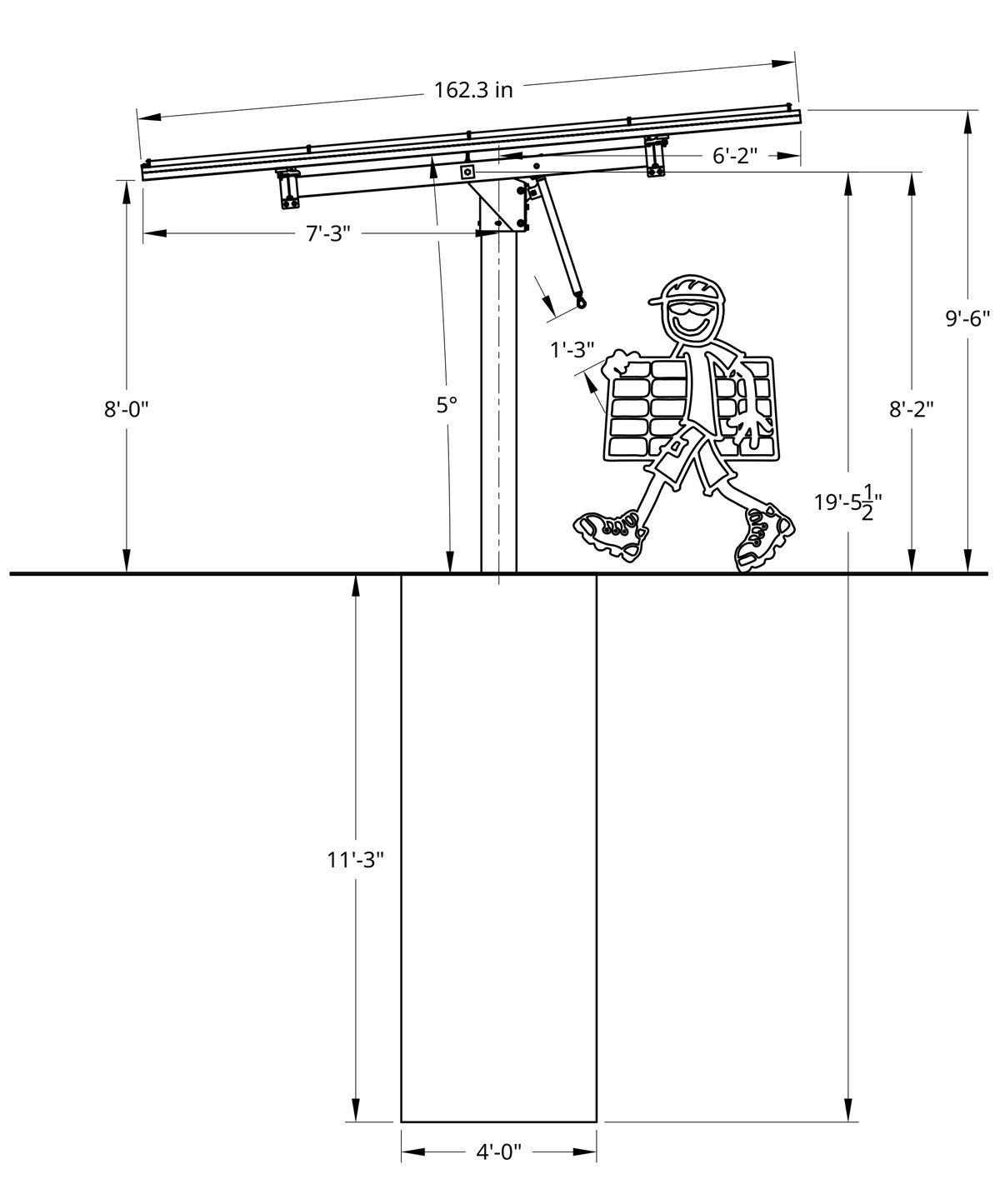
Then there was the ground. Students and researchers plant, weed, irrigate, and harvest beneath the arrays, so the racking had to keep the space under it open and the footprint on the soil small. Each array sits up on its own pole, with about 8 feet of clearance under the low edge, so people can stand tall and work the rows without ducking.
Clean Power That Moves With the Research
GRID SoCal designed a 24 kW system of 72 modules on six MT Solar pole mounts, 12 modules per array. Over its lifetime, the system is expected to produce more than 800,000 kWh. Cal Poly Pomona estimates it can power four to six homes for a year.
At the ribbon cutting, GRID SoCal electrician Jose Sandoval showed attendees how each array is adjusted and repositioned to follow the sun through the year. That same adjustability lets the research team compare shade levels against plant growth, soil moisture, and energy output.
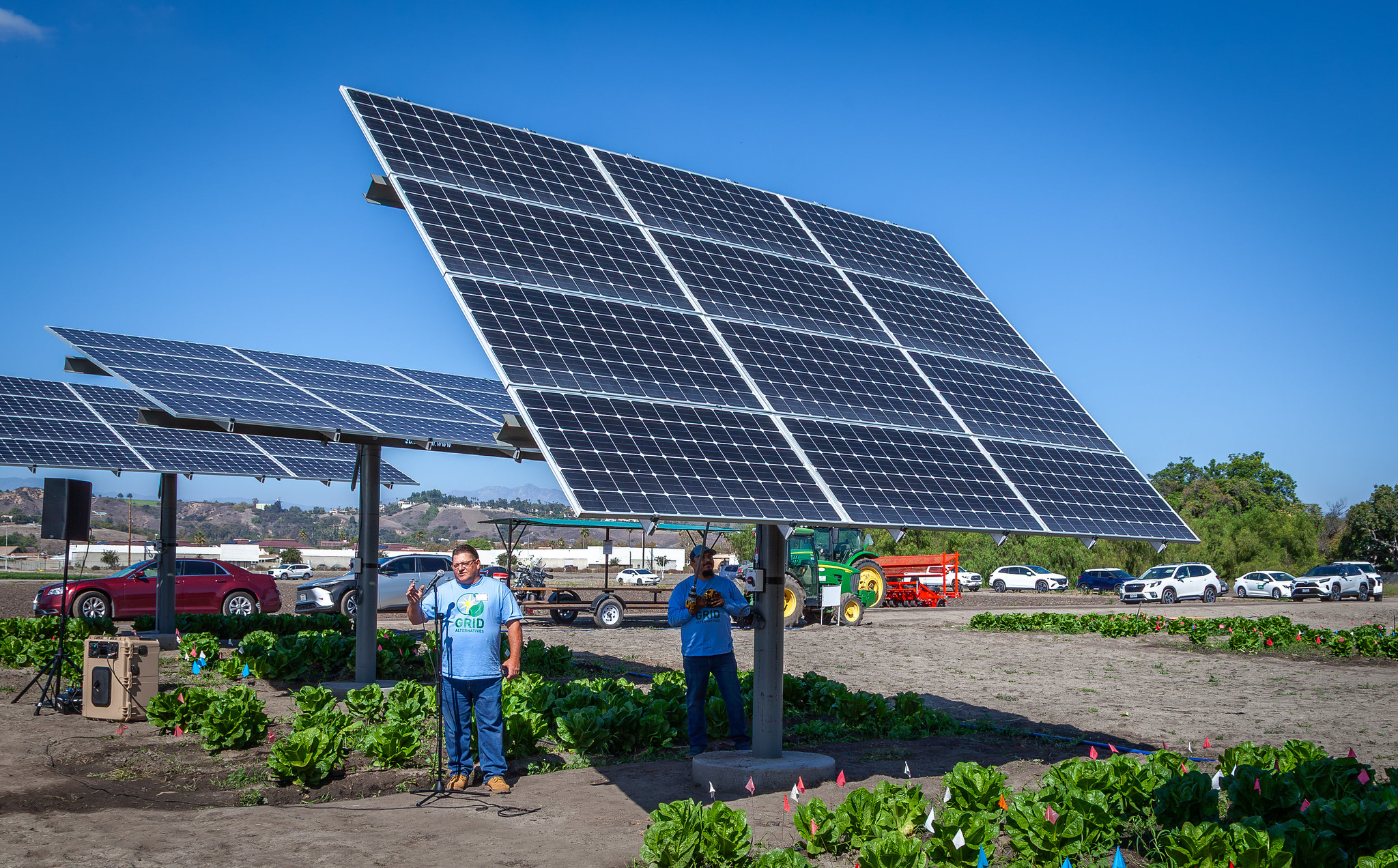
The system also feeds two 5 kWh Onyx R5 portable batteries. Each battery can run a 2,000-watt water pump, which is a practical tool on a working farm. During the ceremony, the batteries ran the sound system, cooking equipment, and drink cooling.
GRID SoCal Construction Director Dan Glasow said the project shows that “sustainability and productivity can go hand in hand.”
System Design Specs
| Array Specifications | |
|---|---|
| System Size | 24kW, 72 modules |
| Array Configuration | 12 modules, 4H x 3W |
| Ground Clearance | 8 ft. at 5º tilt |
| Tilt | Fully Adjustable |
| Storage | 2 x 5kWh Onyx R5 portable batteries |
A Living Lab for California Agrivoltaics
Spadra Farm is a working classroom. Cal Poly Pomona students and Conservancy fellows tend and harvest the crops, collect the data, and compare plots under the panels with full-sun control rows. The farm is open to the public on weekdays, and visitors can see the arrays in person.
For the Conservancy, the goal reaches past one research plot. Director Susan Phillips described it as helping communities “empower people to power themselves” while growing food. Project co-lead Rose Olivas put it plainly: “We’re making agricultural history here in Southern California.”
Agrivoltaics is moving from an idea to something people can visit, study, and learn from, and Spadra Farm is a good example. Pitzer College, Cal Poly Pomona, and GRID Alternatives are testing how the same land can grow food and make clean power, and what they find could help farmers and installers well beyond Southern California. We’re excited to see our mounts at work in dual-use settings like this one, and proud to be part of Southern California’s first agrivoltaics research site.
GRID Alternatives
2100 Atlanta Ave,
Riverside, CA 92507
gridalternatives.org
Photos courtesy of Pitzer College, the Robert Redford Conservancy for Southern California Sustainability, and GRID Alternatives.
Do you have a project you’d like to share?
Submit your MT Solar install story here, and we’ll help you tell the world about it.


